Monday, October 22, 2012

New Blogs and New Friends

Here are the new blogs I enjoyed or found interesting.  Hope you enjoy!!!

1.  Cool Cat Teacher


http://coolcatteacher.blogspot.com/

       The blog is owned and operated by Vicki Davis and she not only seems quite popular but has been given many awards.  She is a full time teacher and mother of three who offers advice on anything to do with life in and out of the classroom.  She seems to target parents of students as well as other teachers.  Her most recent post centers on the importance of a teacher taking their private time throughout the day to stay refreshed and ready for anything!!!

        This blog is great for a new teacher such as myself to learn from a veteran teacher who uses technology flawlessly.  The blog has benefits immediately to EDU 533 as it serves as a premier example of how to set up a successful and easit to navigate blog.  It is also a great resource in itself jam packed with useful links for both new and old teachers.  She incorporates the technology extremely well.  This is a must add to any teacher's google reader and a lot can be gained from Vicki's words of wisdom.

        Vicki's most recent post is my favorite for a number of reason.  I particularly enjoyed how the poem was about everything a good teacher is and how sometimes they might not got recognized.  I though the use of the teacher's tombstone at the end was effective as well as supported the text.  The last line echoed with me especially having been in the elementary school subbing lately.  I could relate to earning recess after spending all those hours with those second graders.  They are a bundle of energy and although I really enjoyed it, they for sure made me sleep well at night.  I really enjoyed the three or four other posts I looked at as well but nothing stood out like the poem Vicki shared in this post.  I believe all teacher's could relate to her thoughts and ideas.

2. Study Hacks 

http://calnewport.com/blog/ 

http://www.mytrickstime.com/2012/01/access-friends-computer-without-his.html    

       I think immediately I though of the kid from my first computer class learning how to hack with the baseball cap on when I saw this blog.  However, it is really cool anyways!!!  The blog belongs to Cal Newport who created the blog in 2007 as a PhD candidate at MIT. (obviously!!)  He is know an associate professor at Georgetown University. (Go Hoyas!!!) and he uses the site to attempt to reach a conclusion to why people are successful and he tried to find some patterns within those that do find success.  Therefore he mostly attempts to teach students how to find success but also aims to show how people can find success and helpful ways to do so.  Some posts would be considered to dos while others would be certain things to avoid in order to find success.  His following seems loyal and enthusiastic although not massive.  There is a lot to learn from Dr. Newport.

       This blog is an excellent look into another way to use your blog and although it might not be the everyday use, it is effective.  For EDU 533, any blog that can effectively help you to further understand not just blogging but technology and how to apply that technology is extremely useful.  I think in a professional sense and as a teacher a lot can be learned from understanding why some are successful and what kind of patterns have developed.  In order to allow our students to be most successful, we must figure out how to start them on the right path and use ways to reach them that our most effective.  This is a great add for both a business man and a teacher.  Everyone should add this unique blog to their reader and hope to benefit greatly from the ideas of a "mad scientist"

       I really enjoyed this post about the CEO of Zipcar reconfirming what we as teachers know to be the most important factor of teaching: PASSION!!!  Not the kind of passion you seen on television today but the real type of passion where you not only love what you do but you want others to love it too.  Of course, you might have a bad day every now and then but it happens to everyone.  We must be passionate about what we love and strive to use that passion to not only encourage others but to influence them to do bigger and better things.  However, Newport reminds us that although we might be passionate we can't lose focus on the task at hand.  Thus in order to be successful we must not be passionate about something that would never work.  We do not what to be the proverbial "seventh grader sitting in the back of the classroom daydreaming."  We must find out passion and work hard to become the very best at it.

http://bosguy.com/2012/02/29/zipcar-eyes-expanding-service-to-provincetown/  
 3.  Funny Monkey

http://funnymonkey.com/blog

A Different Kind of Funny Monkey   
        This blog is unique that is is owned and operated by more than one person which seems to really benefit the blog by allowing different opinions to be brought forward.  Team Primate is made up of Jeff, Andrea, Abby, and Bill.  Although they may have differing backgrounds they share a passion for education.
They are all concerned with presenting ideas from the classroom for those who wish to be teachers or administrators.  This blog is obviously quite opinion based but it is viewed by many educators who all seem to enjoy it.  It is important for all who wish to stay up to date with the latest and greatest from the world of education.

       The blog is beneficial to us in EDU 533 because it is constantly using and introducing the very elements we are learning and using on a weekly basis.  Their latest blog talks in great detail about google badges.  I also think it is extremely beneficial to us as educators as we move forward in learning how to improve are ability to stay "up to date" with an ever evolving classroom and student body.  Funny Monkey sheds some light on topics that we might have been kept in the dark.  I think every person could learn a lot from this blog about the future of tomorrow.  I believe that all teachers should view this blog at least once, but would greatly benefit from having it in their reader.

       I really enjoyed this post by Bill about cheating and where the real responsibility for cheating and those who cheat lies.  I could not agree more that the cheaters themselves are to blame.  I believe BIll was 100% correct when he said, "What's more time consuming? Running a good portfolio system that works, or dedicating class time to teaching the test, taking the test, and trying to catch the cheaters after the fact.
To all the people who get a lot of attention for saying that our educational system is broken: please stop, and consider that our assessment system is broken, and is getting in the way of student learning."  I believe that people will inherently cheat but we have to be the first in line to make them feel as though they do not need too.  Let's throw standardized testing out the window.  Let's teach our children to perform better with more focus and drive.  People blame too many different contributors into why kids fail or why kids cheat, let's give them a reason not too.


Sunday, October 14, 2012

Compare and Contrast: Digital Nation and Growing Up Online

PBS Videos

Growing Up Online v. Digital Nation

Kidd Heat

1.  Compare and Contrast each documentary.  What has changed from the first one (Growing Up Online) made in 2008 to the newer one (Digital Nation) filmed in 2010 ?  How did what you watched in the two videos support your feelings about technology or how did it change your views?

The ability for kids to access both a wide array of technology and to communicate with anyone and everybody online has changed since 2008 to 2012.  Especially with the use of twitter, Instagram, continual rise of Facebook, and many other networking sites.  In the first video, my thoughts on the appropriate and safe use of technology were confirmed by the actions of the children and reactions by their parents.  I could really feel for Jess aka Amber as I also remember trying to become someone else online when I was a younger user.  My use was also not monitored and I tried to become a different person while I played xbox live or surfed AIM in the early days of technology.  However, she was taking risky photos at the age of 14 and although she might have looked 18 and pretended to be an adult, she was NOT.  I believe the real problem that I see here, and that I have always seen with technology, is that teenagers must be monitored online and taught digital citizenship BEFORE they enter the online world.  There is other ways Jess could show her individualism without taking indecent photos and pretending to be something she was not.  My other problem with my feelings towards technology and is the overuse and over reliance on the technology.  In the second documentary, I believe the MIT students as well as the Korean students show that at times teenagers, students, and all people in general need to unplug from the technological world from time to time.  I have always thought that if we overuse and abuse the use of technology more and more, the kids of the next generation will only exponentially make the same mistakes.  If this problem is not addressed with our own students and kids, the message will not be understood and the next generation will have little to nor social skills and will show the inability to "think outside the box", or computer in this case.   

2.  Your thoughts on multitasking.  Do you agree?  Can you multitask?  Do you disagree with the video on the topic of multitasking?


I have to agree with the Digital Nation and it's study on multitasking.  I have always been one to multitask, however I know for a fact that my best work is done when I focus on "one" task at hand and perform that task to the best of my ability.  I do believe teachers must be able to multitask but they also must know their limit and stick to it.  If we extend ourselves to much, we will not be as great as we can be.  I also believe that with all people, especially students, a plate that is too full can have adverse affects on not only outcome but can stunt a person's ability to focus and stay on task.

3.  Is there an addiction happening in society today with technology or is it just a new way of living?   Should we be concerned?

I agree 100% that the use of technology in society today is an addiction for many, many people.  I believe we all must "unplug" to keep our sanity and for those who are overly addicting to certain elements of technology it can be harmful to our physical health.  Take for instance this story about a healthy 19 year old in Taiwan that died after playing a popular video game, Diablo 3, for 40 hours straight without eating.  It is sickening that society would 1) allow this and 2) no one would worry about his safety especially those who ran the internet cafe.  This is not the first time and like in the documentary there can be other adverse side effects to being "cooped up" in front of the computer or the xbox for extended periods of time.  As a society, we stress to not do illicit drugs, drink too much, or smoke too much but we need to start emphasizing that we can not be "addicted" to the technology we rely on and spend too many hours abusing a gift we have been given.

4.  Do video games serve a purpose in education or are they a waste of time?

Video games can be extremely beneficial in the educational field if monitored and used effectively.  For instance, special education students can play games geared towards implementing a specific goal or function and training the student to repeat this task correctly over and over again.  I also think games that involve strategy are good to stimulate the brain in ways and times that we might not be using the brain in an effective way.  I remember playing the board game war and other video games growing up such as Carmen San Diego where you had to use logic in order to win the game.  Although many games do not have educational value there are those who are extremely effective and can help a student by emphasizing memory or a skill they might not have learned otherwise.  They are certainly not a waste of time when used and applied in an efficient manner.  

5.  Do you believe that digital tools such as google tools can save schools that are struggling?

I really do believe that if google tools are taught to all and used effectively, that they could save many schools.  Take for instance the school in New York, the principal reported that she saw a major difference in the students and also that violence had dropped significantly.  I believe that by teaching the technology first and then incorporating it into every day education you can save a struggling school by giving the teachers and the students the tools to perform tasks they might not have been able to perform previously.  We must be educated on these google tools before trying to show someone else, especially a student, how they can better their live and performance by using these tools.

6.  Do parents of today have any idea what their kids are doing online?  Whose job is it to teach them the safety and digital responsibility? Parents/Teachers/Community/Government??

In all honesty, I believe in general parents DO NOT know what their children are doing online but I do believe digital citizenship is becoming more and more recognized.  I know for a fact that when I have my own kids I will 110% monitor their activities both on and offline.  I do believe it is the parent's responsibility but I do not think is their fault as to be naive on the topic.  If you think about the difference in technology of say a 45 year old mom compared with her 16 year old daughter, it is  almost unbelievable to see the difference between the two.  I think parent must educate themselves on digital citizenship and align themselves with their kids teachers in order to safeguard their experience while in school and after they graduate with technology and their online time.  I believe the community and community places such as the library can put restrictions on access and protect their kids with regard to their use of technology.  I think the Government should only step in to help protect people online from predators and people who misuse technology in order to exploit people especially children.  

7.  Are kids and adults today ruining their digital footprints by sharing too much information online without realizing that it may be detrimental to their future? Should they care?

Adults and kids must be careful to not "over share" their lives on Facebook and other networking sites.  Adults must also be sure to safeguard their personal and financial information.  All it takes is someone to get a hold of your social security number and your bank card information and your identity could be stolen all across the globe.  I believe kids from the time they are first using networking websites, such as Facebook or myspace, do not realize that what they post is seen by many, many people.  For instance, when I was in my second year at UNH i changed my facebook name to Kidd Heat in order to prevent graduate schools and potential employers from seeing my private pictures and private comments between my friends and myself.  Students; whether in middle school, high school, or college, must care about what they are representing themselves as with their digital footprint and made aware that what they do as a 17 year old could affect not just their acceptance into college but at any time in their life.


8.“Stranger Danger” and predator fears are often overblown by the media on shows such as Datelines “To Catch a Predator”.  What are the real dangers of technology in this day and age?  

When I have my own children, I will fear that that someone will stalk them or attempt to hide their own identity and mislead my child into befriending them.  I will educate my children that just as they would not talk to a stranger in "real" life, they must not talk to a stranger in the online "world."  However, I think there are many other dangers of technology that are overlooked and are only coming to late as of late in this day and age.  I am extremely pleased at the efforts that being made in regards to cyber-bullying and I hope they continue to make more and more progress in stoping these acts of malicious wrongdoing.  I used to think why doesn't the kid just stand up to the bully and punch him square in the face like the old days, but I learned how bad it can really be when you are bullied in the cyber world.  There is almost never just one bully and there is never just one form of attack.  Bullies use all forms of technology to poke fun and cause malice to their victims and unfortunately as we have seen in the past it can have devastating consequences.  As the New Hampshire State Police tag lined this summer, it too can apply to cyber-bullying, "one death is too many."  Let's fight cyber-bullying by monitoring our kids and our students and creating a more accepting generation in the near future.  

Feel free to add anything else you feel would explain your views about the videos and how they relate to educational technology. What was your favorite part of either video? Why? Most interesting?

I personally really enjoyed the first video because I have battled problems with compulsion my entire life and as many people know a compulsive person can have problems with anything you can become addicted too.  I have limited my time on the computer and on the xbox as I used to spend far too long staring at the screen and to be honest my vision and physical and mental health were ultimately compromised.  I now work out and spend more time with family and friends in an effort to keep myself to returning to previous problems.  I believe strongly that any buddy can become addicted to anything but with help and the right attitude any obstacle can be overcome.  "Nothing in life is easy, but anything is possible."


Friday, October 5, 2012

Digital Citizenship: Let's Protect Everyone

        Now that Kidd Heat has introduced digital citizenship in my previous blog, let us examine it even further in three unique ways.

        Personally, digital citizenship was taught to me at a very young age.  I remember sitting in my 6th or 7th grade technology class and the teacher telling us that we must show respect for everyone online, the same as we would offline.  My first exposure to the misuse of technology involved AIM instant messenger and a good girl friend of mine.  She started to get messages everyday from a few "mystery" people calling her some very harsh and inappropriate names.  I remember her crying into my shoulder and me getting extremely upset and angry over the issues.  I eventually found out who was sending these messages to her and although I wanted to take physical action, I knew in the back of my mind that it would stop unless he was taught the consequences of this action.  The school eventually got involved and he was suspended from school and suspended from the use of AIM.  However, more importantly our entire class was educated on how to be good "digital citizens."  In a world today were people are so quick to ban someone from online I especially enjoyed this article because although the actions of one person were offensive and unnecessary it should not mean that certain elements of technology are banned within our schools.  David Nagel simply and reflectively states, "Before choosing to restrict the use of social and mobile tools in schools, policymakers and education leaders have to consider the negative impact such restrictions will have on learning."

stop cyberbullying
http://info.uknowkids.com/blog/bid/159164/Global-Perspective-on-Cyberbullying

        As a teacher we all must consider this statement and figure out not only how to make the use of technology work, but what is the most effective way to enhance student performance.  As teacher's we must understand how to teach digital citizenship to our students and how they can benefit from the technology safely and efficiently.  Teachers of all levels of education need to examine appropriate ways to teach digital citizenship and teach their students what the importance of maintaining these practices will accomplish.  For older kids, those in 6-12 grade, we must teach students to understand their actions and the mistreatment of technology to harm another student is simply not allowed.  No one deserves to be bullied in general but to use technology to bully on an even greater basis is unacceptable.  For younger kids, I found Technology with Intention to be extremely effective in making rules that are both are simple and straightforward.  They depicted below this paragraph and show how effective one teacher has been on her students even though they are not even out of elementary school.  The responsibility they understand before they even enter a middle school will become even more beneficial as they move forward with their educational experience.

1. Give attribution if you use someone’s work. Be sure you have their permission!
2. Read through the recent comments so you don’t repeat what someone else just said.
3. Proofread your comments before publishing so people will understand what you mean.
4. She taught us how to read the post before writing the comment, so your comment is not out-of-the-blue or off-topic.
5. Never publish a comment that is not checked by a parent.
(http://www.techwithintent.com/2011/05/why-teach-digital-citizenship/)

http://www.careerrocketeer.com/2011/07/is-your-digital-footprint-squashing-your-reputation.html \ 
        The video we watched in class about our own digital footprint really got me thinking about growing up in this age of technology and digital citizenship.  Besides all my medical records and where I have lived, my own influence on my digital footprint should be one of a very positive nature with respect for all those who might view it at one time of another.  I  hope that my work while at UNH and SNHU becomes a part of my footprint I can be proud of and share with all those who want to know how I got to where I am today and for tomorrow.  I hope that one day I can perform this motivational rap (rough version) to high school students so they can realize what can happen to me, can happen to anyone.  My digital footprint will extend to what my students do while in my class and how they access technology and I want to proud of the work they do while in my classroom.  I also want my Facebook and Facebook pictures to reflect a digital footprint that I am happy to share with my students, friends, and family.  I want my own children to further expand my own digital footprint while starting their own.  Your digital footprint is your technological identity and it is important that we not forget this on an everyday basis.

Me and my future wife : )


Monday, October 1, 2012

Voki Discusses Digital Citizenship


More information on these policies including other important policies are contained in this video.

Sunday, September 30, 2012

Classroom 2.0 Live: Inquiry Learning and Empowering Students Literature Review


Picture Date:  Saturday, September 29, 2012
Time: 9:00a
m Pacific/10:00am Mountain/
11:00am Central/12:00pm Eastern
Location: Blackboard Collaborate (Formerly Elluminate)


Classroom 2.0 Link: 

http://live.classroom20.com/archive-and-resources.html


Literature Review

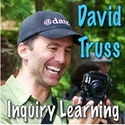
        David Truss is a strong advocate for student driven, inquiry learning with the use of technology in the classroom.  He believes that students can greatly benefit from using technology to expand on what they learn and learn even more on their own.  His beliefs are echoed within EDU 533 and our overall philosophy that by using technology we can not only improve our teaching but we can thus greatly influence the learning of our students and take their education to another level.  Truss believes, "Internet and technology is a faster game than that of the past."  This idea is echoed in the outcomes of EDU 533 by employing the idea that with the use of technology in an effective way, teachers can be much more effective and students can improve and learn at a much faster pace.  Even the idea of inquiry learning, or a student driven self discovery, echoes the general philosophy of EDU 533 outcomes in that by expanding with technology each facet can be greatly improved upon.  The complete list of learning outcomes for EDU 533 is listed below:
1. Demonstrate the understanding of how technologies can effectively promote student learning
2. Evaluate and use a variety of current technologies to enhance content instruction and to advance studentsí technological literacy
3. Design meaningful and authentic digitally based learning experiences with multiple and varied assessments
4. Reflect upon and demonstrate effective use of digital tools and resources
5. Demonstrate a comprehensive understanding of safe, ethical, legal and moral practices related to digital information and technology
6. Illustrate through application how state and national standards are implemented within the curriculum (e.g., NH Curriculum Frameworks,
ISTE (NETS-Teacher/NETS-Student) and NH-ICT Literacy Standards for K-12 Students (306.42))
7. Demonstrate an understanding of the use of adaptive technologies and other digital resources to personalize and differentiate learning
activities for every student
8. Evaluate, adapt and reflect on emerging tools and trends by participating in local and global learning communities and by reviewing
current research and professional literature


ttps://blackboard.snhu.edu/webapps/portal/frameset.jsp?tab_id=_2_1&url=%2fwebapps%2fblackboard%2fexecute%2flauncher%3ftype%3dCourse%26id%3d_73415_1%26url%3d

       However, Truss makes another great point, "It's not the tool, but how you use it that matters."  As a teacher I must facilitate my own teaching and the student driven learning with technology.  I must help my students to realize not only that they can expand on their learning but help them find ways to accomplish this goal.  On Truss' web site, Inquiry Hub, we can find the ideal layout on how to not only reach our students using the technology but the plan laid out via his "7 Ways to transform your classroom." You can view the philosophy here, but basically for a teacher we must start at the beginning of the spectrum with the use of the technology and the process that goes along with it and teach our students the same ideas.  As a teacher I must let my students inquire, while guiding with my voice but listening to them as well.  They must learn and share with their peers and our community both in and out of the classroom.  Kids must learn and play within the same technology and by doing so the network is extended and extended and our students will continue to learn more and more.  As Truss said, "We must help them learn by letting them explore with technology while helping them along the way."

        I learned so much in this one hour of live classroom.  Truss is an incredibly smart man who has the utmost respect in the teaching community.  He was able to create a student driven inquiry and share to many educators including myself how to transform your own classroom into this technological driven playground.  I learned strategies to incorporate student driven lessons based upon technology and not just how to employ this strategy but also how to monitor and help the students reach their potential.  I also learned the actual process in how classroom 2.0 works and how the webinar is ran.  I believe this is just as important and vital to understanding how to reach children based on the technology presented and using it to share new and fun ways to help improve their performance.  I really believe Truss' idea is an unbelievable leap into a new generation of technology driven learners.  I really had not considered the impact of community and audience in the education of our students.  Not just their ability to reach their audience but what they can learn from working with the community and sharing with a much extended audience.  I mean just think for a minute, even as I write this blog, I am learning and whoever reads this is learning what I have just discovered.  Technology is the means of the future and through educators like Truss and through ourselves we can ensure a better tomorrow.


http://pairadimes.davidtruss.com/7-ways-to-transform-your-classroom/


Sunday, September 23, 2012

Week 1 Question

After viewing this incredible video I was asked to ponder the question:

SHOULD WE INTEGRATE TECHNOLOGY IN THE CLASSROOM?

       In all honesty, there is very little downside to the use of technology inside the classroom.  As long as the teacher is monitoring the use of the technology there should be no misuse of any form.  The benefits of using all diffrent kinds of technology are endless, but let's look at a couple of good examples.  For instance, a child can use an ipad to help learn a lesson especially in cases where they might not otherwise understand.  Another example would be the use of the internet and other databases to find out information about any subject that warrants research.  All children, no matter what age or ability, can benefit from the proper use of technology in the classroom. 


http://www.britannica.com/blogs/wp-content/uploads/2009/12/laptop.jpg


     I use technology all the time in my personal life from the time I wake up until I go to bed.  I awake to the alarm clock (clocks someday s : ) ) on my Iphone, I usually then check my email and Facebook before I shower.  While I am in the shower I usually listen to music on my phone, either tunes I have downloaded or Pandora.  I use my phone to check email and Facebook throughout the day as well as keep in touch with friends and family.  When I get home from class or work, I use Skype to catch up with friends and sometimes I get on my Xbox360 and play games with friends I have all over the country.  I use technology all day, every day and there is not a single day that goes bye that I am not using some form of technology.  I am excited to start blogging and use another form of technology to connect in and out of the classroom.

     In my own education, pre-college, I was never exposed to technology besides an occasional power point presentation that I needed to create.  I remember when I was younger and we used to play games like Oregon Trail on ancient old computers.  Teachers used the old overhead projectors and we watched VHS's in class all the way until I graduated high school.  It is amazing to think that only seven years ago I was learning and being taught using what we today would consider ancient.  While I was at the University of New Hampshire, I was exposed to better and newer technology that I had not seen or used before.  I was taught how to find information in different databases, I worked with new technology on my own, and teacher's incorporated clickers and hands on technology in their classroom.  It was an eye opening experience and probably shaped how I feel about this week's question.


THEN

http://benchmarkreviews.com/index.php?option=com_content&task=view&id=326&Itemid=38
NOW

http://www.modthesims.info/download.php?t=272779